Daisy Handwritten: A Floral Script Font with Genuine Character
Finding a font that feels both personal and polished can be a challenge. Daisy Handwritten solves this by blending authentic handwritten charm with delicate, integrated floral details. It’s a typeface that doesn’t just sit on the page; it communicates warmth, creativity, and a touch of natural elegance. For designers, entrepreneurs, and creators, it offers a distinctive voice for projects that need to stand out from the crowd of generic premium fonts.
Understanding Daisy's Visual Personality
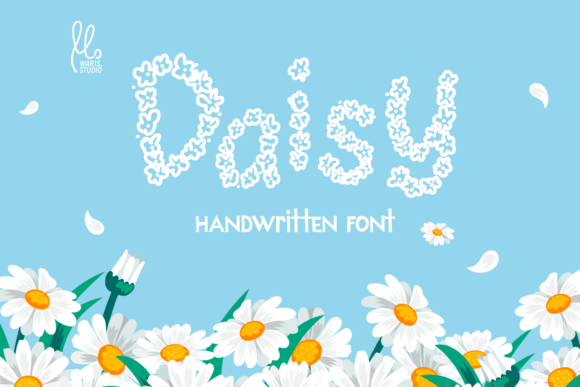
At its core, Daisy is a handwritten font, but it elevates the style with its signature feature: subtle floral flourishes. These aren't overwhelming or overly decorative. Instead, they appear as organic extensions of the letterforms—a gentle curl at the end of a 'y', a soft bloom integrated into the crossbar of a 't'. This gives the script font a cohesive, artistic quality. The letter spacing and baseline have a natural, slightly irregular rhythm, mimicking the flow of real handwriting. The overall effect is friendly, approachable, and visually engaging, making it a powerful tool for brand identity projects seeking authenticity.
Where Daisy Truly Blossoms: Practical Applications
The versatility of Daisy Handwritten is one of its greatest strengths. It functions beautifully as a display font for headlines and logos where personality is key. Think of a boutique bakery logo, a wedding invitation suite, or the header of a lifestyle blog. Its playful yet refined aesthetic also translates well to packaging design, especially for artisanal goods, cosmetics, or gourmet products where a human touch adds perceived value.
In the digital realm, Daisy shines in social media graphics and web design accents. Use it for call-to-action buttons, testimonial quotes, or Instagram story overlays to grab attention and foster connection. For editorial design, it can bring a dynamic, personal element to magazine pull quotes, chapter titles, or book covers, especially in genres like romance, self-help, or children's literature. It’s also a fantastic choice for personal projects like custom merchandise, greeting cards, or scrapbooking, where its charm adds a heartfelt layer.
Pairing Daisy with Other Typefaces
A creative font like Daisy rarely works alone. Its effectiveness is often amplified through thoughtful font pairing. The goal is balance. Daisy’s ornate, flowing nature pairs best with clean, simple companions. A classic sans serif font like Montserrat or Lato provides excellent contrast for body text, ensuring readability while letting Daisy’s headings remain the star. For a more traditional or elegant feel, a sturdy serif font like Georgia or Merriweather can ground the design. Always test your pairings at various sizes to ensure the floral details don’t become distracting or muddy at smaller scales.
Key Considerations Before You Use It
While Daisy is a versatile font, it’s not for every context. Its decorative details mean it’s best suited for short, impactful text—headlines, logos, single words—not for long paragraphs of body copy, where readability could suffer. Evaluate the mood of your project. Does it call for whimsy, warmth, and nature? If yes, Daisy is a strong candidate. If the project demands stark minimalism or corporate seriousness, a different typeface might be more appropriate.
When you download Daisy, review all the included styles and glyphs. Many premium fonts like this come with alternates, ligatures, and swashes that allow for customization. Experiment with these to create unique letter combinations for your logo or headline. Finally, always verify the commercial font license. Ensure it covers your intended use, whether for a client’s brand identity, a commercial product line, or a digital download. A font is a critical design asset, and proper licensing protects both you and your client.
In a landscape saturated with sterile digital type, Daisy Handwritten offers a breath of fresh air. It’s a tool for designers and creators who want to inject genuine personality and a sense of crafted care into their work. By understanding its strengths and applying it thoughtfully, you can use Daisy to create designs that don’t just communicate a message, but also evoke a feeling.